Monday, May 30, 2011

Summertime Eating


I try, as best as I can, to eat seasonally. With warm weather and summer approaching, I begin to consider the types of foods and menus that are appropriate for eating this time of year. Eating seasonally varies depending on where you live. I live in the Northeast, and so I enjoy four very different seasons. Seasonal cooking allows me to appreciate the freshest ingredients--and it’s a fact that fruits and vegetables grown near your home are generally healthier. Just consider the thousands of miles that produce from the west coast has to travel before it arrives in the Midwest or East Coast. During the summer months I buy my produce at a variety of farmer's markets. Over the years I've developed a relationship with the farmers whose vegetables I most enjoy, and learned where and how my vegetables will be grown and harvested. I support the farmers who grow organically because I believe that organic vegetables are the best for my body. I love to browse the market and I poke around the stands and notice what fruits and vegetables are available. I talk to the farmers—they are usually thrilled to tell me how they grow their produce. They will tell me if they use pesticides or follow more organic farming methods. Visiting the farmer’s market is the easiest way to determine what is seasonal where you live. During the summer months I normally eat lighter fare. The weather is hot and humid, and I am looking to cool down my body. I am outside more in the summer and tend to be more active. During these months, there is an abundance of juicy fruits and vegetables sprouting from the earth. During the warm months of summer, I tend to eat foods that have higher water content like fruits, lettuces, tomatoes, watermelon, cucumbers and large leafy greens. I also eat more raw vegetables and more cracked grains. Raw foods and fruit generally have a cooling effect on the body. Fruits and vegetables are abundant during the summer, so that is a clue that you might consider eating a variety of summer fruits and veggies. Everyone needs to be responsible for their own food intake and decide which foods work best for them. Just remember that variety is the key to a healthy body—eat different foods each day—and experiment with your diet. You can learn to create healthy, balanced, and delicious meals wherever you live.

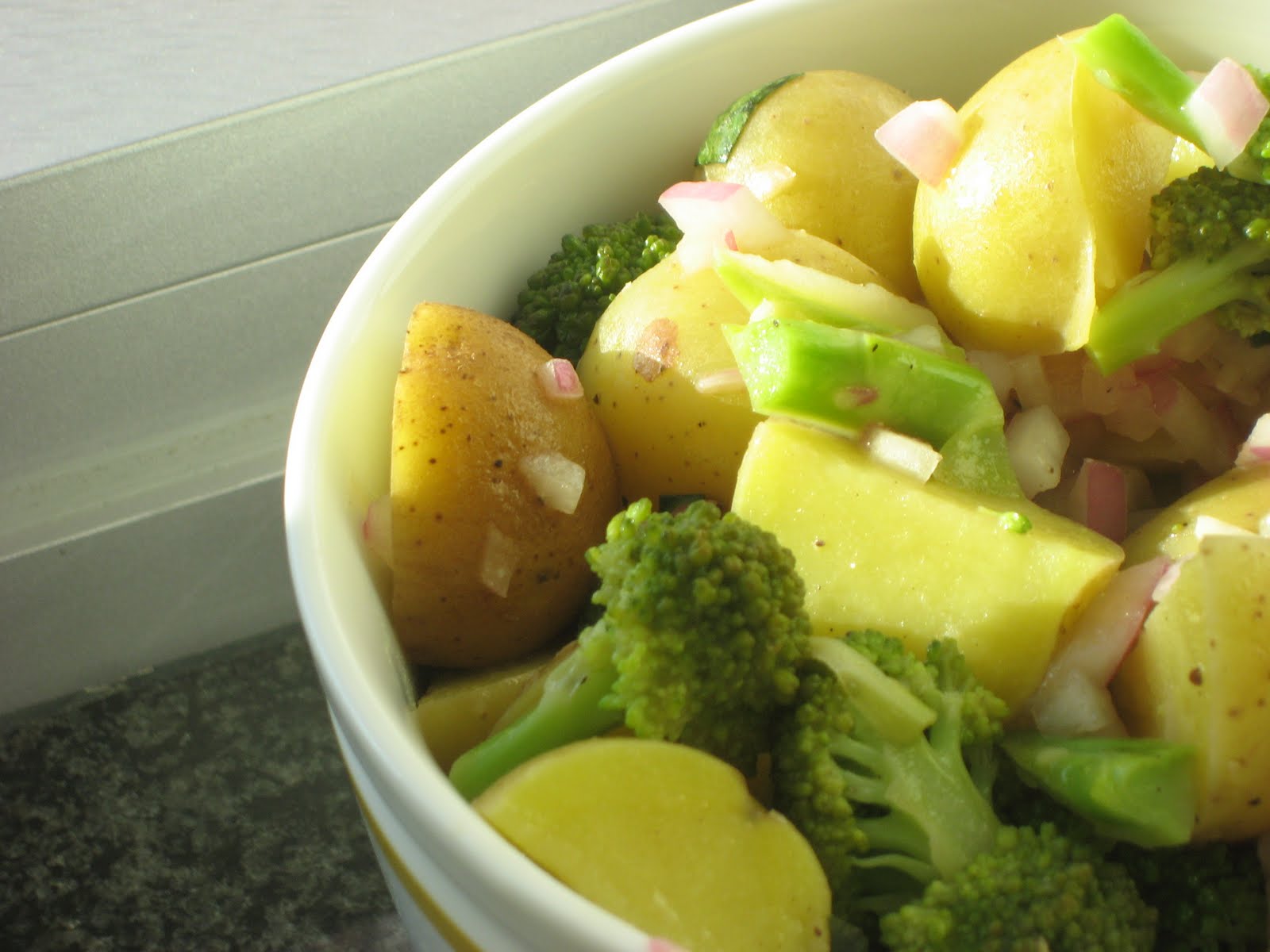
Blissful Potato Salad

We love our potatoes. We love them baked, mashed, fried, as chips and in salads. Maybe that is why it is the number one vegetable crop in the world! Potatoes are part of the nightshade family of vegetables which also includes eggplant, tomatoes, and peppers. When potatoes are not eaten fried or loaded with sour cream and bacon they are a very healthy food item. A baked potato when eaten in its natural state is a low calorie and high fiber food. It is a good source of vitamin C, B6, copper, potassium, manganese, and dietary fiber. I like cooking with baby yukon gold or red bliss potatoes that can be found this time of year at the farmer's market. They have a creamy texture and are eaten with their skins on for an added nutrional punch. I prefer to use them immediately rather than storing them in the refrigerator. They are best when kept in a cool area that is not refrigerated. The following potato salad is considered a "french potato salad". I've added broccoli and discovered a delicious alternative.


Blissful Potato Salad
24 small potatoes (a combination of yukon gold and bliss)
1 cup broccoli
3 TBS red wine vinegar
9 TBS olive oil
1/2 tsp dijon mustard
1/2 red onion, minced
2 scallions, minced
2 TBS fresh basil, chiffonade
salt and pepper to taste

Wash but do not peel the potatoes. Cut the potatoes in half or quarters. Place in boiling salted water until tender. Remove when done and add the broccoli to the same pot and cook until tender. While the potatoes are cooking make the vinaigrette. Combine the vinegar, mustard, salt and pepper in a bowl. Slowly whisk in the olive oil. Pour over the warm potatoes. Add the broccoli, onion, scallion and basil. Mix gently together. Let sit so that the flavors will be absorbed together.

Happy, healthy eating!

Sunday, May 29, 2011

Grains are not the Enemy

I used to love to eat bologna sandwiches on soft, squishy white bread. I added lots of mayonnaise, and I would have a great lunch--or so I thought. If I was feeling really adventurous, I would tuck in some potato chips. Only later did I find out that there was nothing about that meal that nourished my body. When I began to switch over to a plant-based diet, I eliminated some of the white foods that were so heavily featured at my meals. That meant that I didn't eat white bread, white potatoes, white rice or white flour products.I made a commitment to eat a whole grain at one meal each day. I tried it for a month and began to feel differently. Sometimes I would have a plain, simple grain -- like short grain brown rice. At another meal I might add a grain to a soup. Cooking grains can be so simple, yet so delicious. I took it slowly, and my taste buds began to enjoy the flavors of these foods.
Really Good Brown Rice
2 cups short or medium grain brown rice
4 cups water
salt
Wash or rinse your rice through a strainer. Repeat this a couple of times. Put the rice in a pot and add the water and salt. Bring the water to a boil and reduce the heat to low. Cover the pot leaving a small gap to keep the water from boiling over. Let the rice cook 35 minutes. Turn off the heat and let the rice sit for about 5 minutes. I also find that I like the texure of the rice better when I soak the grains for several hours before it is cooked. Try it both ways and see which suits you.
Fried Rice
Leftover brown cooked brown rice
1/2 red onion, sliced into half moons
1/2 yellow or red pepper, sliced thinly
1/2 carrot, sliced into thin matchsticks
1 TBS shoyu (or to taste)
A few tablespoons water
Snow peas, sliced thinly
1 scallion, sliced
Sesame oil
Heat the oil in a skillet. Add the onion and pinch of salt and saute for a minute. Add the carrot and saute for 2 minutes. Add the red pepper. Add the rice and season with the shoyu. Stir everything together. Sprinkle the water over the top of the rice and place the snow peas on top. Cover and let it sit with the heat off for 5 minutes. Mix everything together and top with a sliced scallion.
Lentils and Brown Rice
11/2 cups cooked brown rice
1/2 cup lentils
1 carrot, diced
1 red onion, diced
2 cloves garlic, minced
Salt
Pepper
Olive oil
Scallions or parsley for garnish
Heat the oil in a pan. Saute the onion and garlic. Add some salt. After a few minutes, add the carrot and saute for another few minutes. Add the rice and stir. Add the lentils and stir. Season with salt and pepper and cook for another couple of minutes. Top with chopped scallions or parsley.


*Grains are divided into two groups: whole grains and refined grains. I try to never eat refined grains. Refined grains have been milled, which removes their bran and germ and in the process takes away dietary fiber, iron and many B vitamins. Whole grains, on the other hand, contain the entire kernel--the bran, germ, and endosperm. It is important to vary the grains that you eat.**Here's an interesting tidbit about parsley and scallions. Parsley has vitamin C and vitamin K and antioxidants that benefit digestion and carotenoids, such as beta-carotene. Scallions, on the other hand, have vitamins A,B and C.

White Beans and Tomatoes

When I visited Tuscany last year, I fell love with their cannellini beans with tomatoes. Last night I made some white beans and simmered them with several tomatoes and spices. At the end of the cooking process, I added some fresh kale that I had just bought at the farmer's market. Although I used dry beans and soaked them overnight, it is perfectly appropriate to use organic canned beans. Like other beans, these pearled gems are low in fat and high in fiber, iron, folate, and magnesium. They have lots of thiamine, which is great for brain power. This dish gets an added punch from tomatoes. At this time of year, tomatoes are plentiful and luscious. When I think of the tomato, I think of lycopene which has been studied for its antioxidant and anti-cancer properties. The addition of kale gives the dish an added boost of calcium, iron, lutein and vitamins A,C, and K.
White Beans and Tomatoes
2 cups cooked white beans
2-3 TBS olive oil
1/2 onion, chopped
2 garlic cloves, minced
1 sprig sage
4-6 ripe tomatoes, chopped
1 cup kale, cut
salt and pepper to taste
Heat the oil in a large pot. Add the onion and cook for 5 minutes. Add the garlic and saute for
another few minutes. Add the tomatoes, sprig of sage, cooked beans and simmer for 30 minutes. If the pot gets dry, add some water but let it cook down. Add the kale and cook for another 10 minutes. Season with salt and pepper. If you wish, you can add 1 tablespoon of balsamic vinegar just before serving.
Happy, healthy eating!

Friday, May 27, 2011

Barley Salad

Now that the weather has turned warm and sunny in the Northeast, I have started to think about using grains in salads. It is an easy way to use leftover grains, and it's so convenient to have an easy side dish ready to serve for lunch or dinner.I first tried the Mediterranean Barley Salad several summers ago when I became vegan. I make it from pearled barley, which cooks quicker than hulled barley. Hulled barley, however, is more nutritious, because it only has the outer hull removed. Pearled barley, on the other hand, has had the tough hull polished off and the outer bran layer removed. I like the pearled barley for salads because it is not as chewy as the hulled barley and it cooks up quicker. This recipe has many of the tasty classic Mediterranean components. If you are a cheese lover, then I would suggest adding some goat feta cheese to the salad. I often think of barley as a winter grain to be eaten in a hearty soup. Using this version of the grain, however, makes a great salad. It is cholesteral free and low fat. A half cup serving of barley has about 100 calories. Barley contains several vitamins and minerals, including niacin (Vitamin B3), thiamine ( Vitamin B1), selenium, iron, magnesium, zinc, phosphorus and copper.This recipe comes from Jessica Porter's book The Hip Chick's Guide to Macrobiotics, a great book to have in your library if you are considering a macrobiotic diet and lifestyle. I've "tweaked" a few ingredients.
Mediterranean Barley Salad
Dressing Ingredients
2 TBS fresh lemon juice
1 TBS Dijon mustard
Pinch of sea salt
2 TBS sherry vinegar
1 minced shallot
1/4 cup olive oil
Salad Ingredients

5 cups water
2 cups pearled barley
1/2 tsp sea salt
2 bay leaves
2 tsp dried oregano
1/3 cup pitted, chopped Kalamata olives
1/3 cup drained capers
1/2 cup toasted pine nuts
1/4 cup finely chopped green onions
1/2 cup crumbled feta cheese (optional)


Combine all of the dressing ingredients and mix.Make the barley by bringing the water and salt to a boil. Add the barley and cover and simmer until tender--about 30 minutes for pearled barley. When it has cooled add the dressing and oregano. Right before serving add the remaining ingredients. Happy, healthy eating!